
Swimming Technique
How Do I Breathe Properly While Swimming Freestyle?
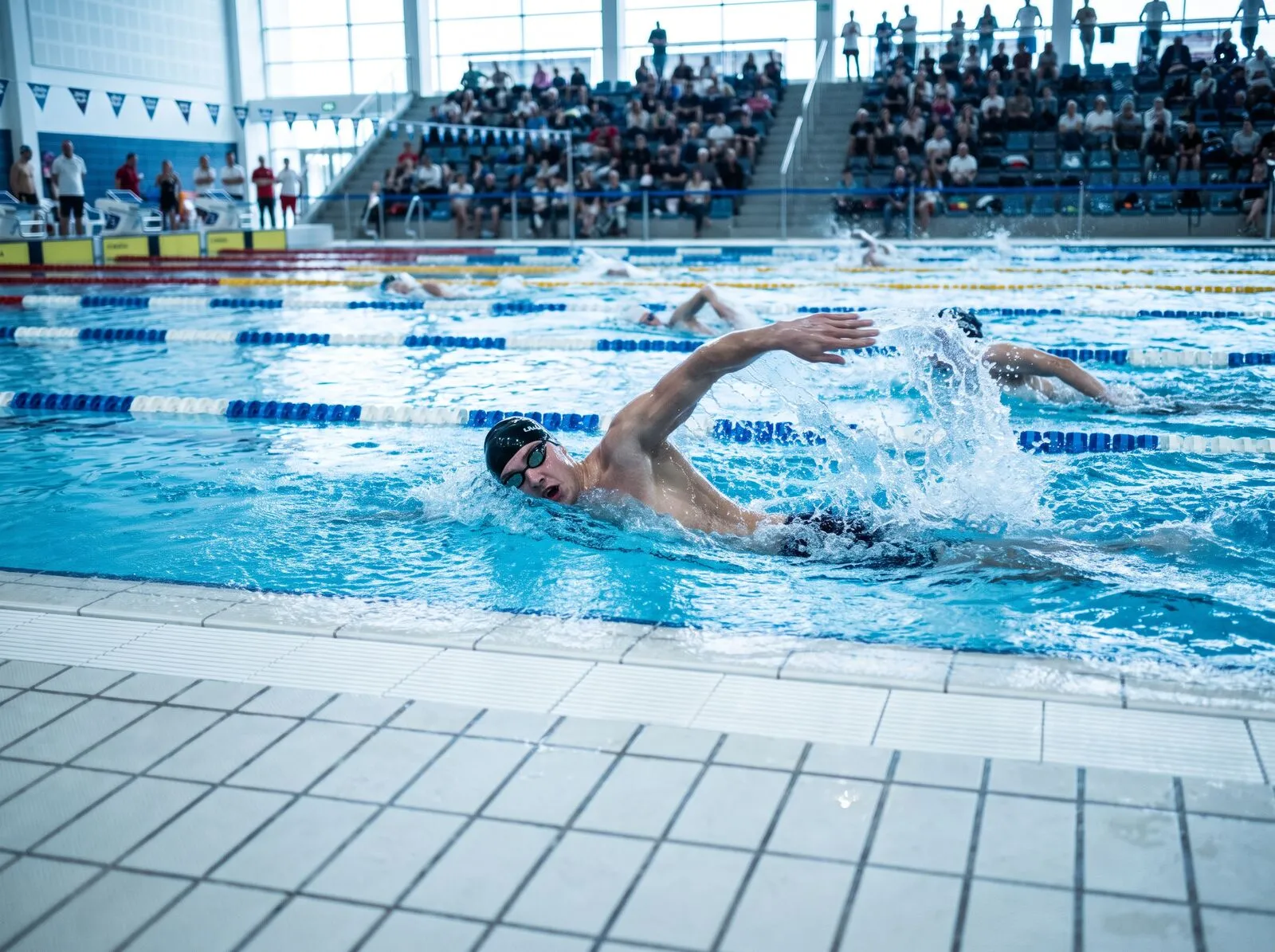
Do you find yourself running out of breath after just a few laps in the pool? Whether you're learning freestyle, training for competition or simply trying to swim longer without getting tired, breathing can be one of the most challenging aspects of swimming.
The problem may not be your endurance. It may be your breathing technique.
Proper freestyle breathing is essential for maintaining body position, conserving energy and developing a smooth, efficient stroke. By improving your breathing mechanics, you can swim with greater confidence, control and consistency at any level.
Let's break down the fundamentals of efficient freestyle breathing and how you can apply them to your swimming.
1. Exhale While Your Face Is Underwater
One of the biggest mistakes swimmers make is holding their breath underwater.
When you hold your breath, carbon dioxide builds up, contributing to the uncomfortable sensation of needing air. When you finally turn your head to breathe, you have to exhale and inhale within a very short window.
This disrupts your rhythm and can make swimming feel exhausting.
Instead:
- Begin exhaling gently when your face returns to the water.
- Release air through your nose, mouth or a combination of both.
- Allow yourself to take a comfortable breath when your mouth clears the surface.
Think of breathing as a continuous cycle rather than a series of separate events.
2. Rotate Your Head Instead of Lifting It
Many swimmers instinctively lift their heads to take a breath. Although this might feel more comfortable initially, it can negatively affect your entire stroke.
Lifting your head often causes your hips and legs to sink, increasing resistance and forcing you to use more energy to move forward.
Instead, rotate your head to the side while maintaining a neutral neck position.
A useful coaching cue is to keep one goggle in the water and one goggle above the surface when breathing, provided your mouth comfortably clears the water.
Your goal is to take a breath without significantly changing your body alignment.
The less unnecessary movement you create, the more efficiently you can swim.
3. Connect Your Breathing to Your Body Rotation
Efficient freestyle breathing is not an isolated head movement. It is connected to the rotation of your entire body.
As your shoulders and hips rotate during the freestyle stroke, your body naturally creates an opportunity to breathe.
For example, when breathing to your right:
- Begin rotating as your right arm moves through its underwater pull.
- Allow your head to turn naturally with your body.
- Take your breath as your right arm finishes its pull and begins recovering.
- Maintain support and alignment through your extended left arm.
- Return your face to the water before your right hand reenters.
Avoid pressing your extended arm downward to lift yourself out of the water.
Your breathing should complement your stroke rather than interrupt it.
4. Find the Right Breathing Frequency
Should you breathe every two strokes or every three strokes?
There is no single breathing pattern that works best for every swimmer.
Breathing every two strokes provides more frequent opportunities to inhale and is commonly used by distance swimmers and triathletes.
Breathing every three strokes, known as bilateral breathing, alternates breathing sides and can help develop a more balanced stroke.
Competitive swimmers may adjust their breathing frequency depending on their race distance, intensity and individual technique.
For open-water swimmers, being comfortable breathing to either side is particularly useful when dealing with waves, sunlight or nearby competitors.
The most important factor is receiving enough oxygen to maintain your desired swimming intensity.
Do not restrict your breathing simply because you believe taking fewer breaths makes you a better swimmer.
5. Avoid Overkicking When You Breathe
An often-overlooked breathing mistake occurs in the lower body.
When swimmers lift their heads or lose balance while breathing, they may compensate by spreading their legs apart or kicking excessively.
This is commonly referred to as a scissor kick.
The additional movement creates resistance, disrupts stroke timing and increases energy expenditure.
Instead, focus on maintaining a narrow, relaxed kick that originates from the hips and works together with your body rotation.
For triathletes, correcting this issue can be especially valuable because unnecessary kicking can contribute to fatigue before the cycling and running portions of a race.
3 Swimming Drills to Improve Your Freestyle Breathing
Drill 1: Wall Breathing
Stand in shallow water while holding the pool wall.
Place your face in the water, exhale gently and then raise or turn your head to take a comfortable breath.
Repeat 10 times, focusing on establishing a relaxed breathing rhythm.
Purpose: Develop comfortable underwater exhalation without worrying about your stroke.
Drill 2: Side Kick Drill
Position yourself on your side with your lower arm extended forward and your upper arm resting alongside your body.
Maintain a gentle kick, keep your head aligned with your spine and rotate slightly to breathe when needed.
Short training fins can help you maintain momentum while learning the movement.
Purpose: Improve body balance, head positioning and rotational breathing.
Drill 3: Single-Arm Freestyle
Swim freestyle using one arm while keeping the opposite arm extended forward.
Breathe toward the side of the moving arm, coordinating your breath with the pull and body rotation.
Focus on returning your head to its neutral position before the recovering hand enters the water.
Purpose: Develop the connection between breathing, body rotation and stroke timing.
Practice these drills in a supervised swimming environment, rest whenever necessary and avoid prolonged breath-holding or hyperventilation.
Why Am I Still Getting Out of Breath While Swimming?
Even with proper breathing mechanics, several other factors can contribute to swimming fatigue:
- Starting at an unsustainable pace.
- Excessive kicking.
- Poor body positioning.
- Inefficient catch and pull mechanics.
- Unnecessary muscle tension.
- Limited swimming-specific endurance.
Breathing is connected to nearly every component of your freestyle stroke. Correcting your breathing technique while neglecting the rest of your stroke may only provide a partial improvement.
This is why personalized stroke analysis can be so valuable.
Identifying the underlying cause of your fatigue allows you to focus your training on the corrections that will make the greatest difference.
Stop Fighting the Water. Start Owning It.
Swimming should not feel like a constant battle for air.
At Race Peak Swimming, we help triathletes, competitive swimmers and adult swimmers develop more efficient freestyle technique through personalized stroke analysis, targeted drills and structured performance coaching.
Whether you are training for an Ironman, preparing for a competitive swim season or simply trying to swim farther without becoming exhausted, improving your breathing technique is an important step toward unlocking your potential.
Keep learning
Related Articles
Swimming Technique
Why Do I Sink When I Try to Float?
Discover the five common reasons swimmers struggle to float and learn how to improve buoyancy, body position and swimming efficiency.
Race Peak Swimming5 min read
Read ArticleFree consultation
Book your free 15-minute call
No commitment. In-person and virtual swim coaching available.
Book a Free 15-Minute ConsultationRead our Google reviews